
Habitat Restoration in Africa
When we think about conservation in Africa, we often think first about wildlife.
Elephants. Rhinos. Pangolins. Birds.
But protecting a species also means protecting the place it calls home. Animals need space to feed, breed, shelter and move. Plants depend on pollinators and healthy soils. People rely on functioning ecosystems for everything from clean water to food and livelihoods.
This is why habitat restoration in Africa is such an important part of conservation.
It is also why restoration is one of the three pillars of OKOA Fund’s work. Protecting wildlife, empowering communities and restoring landscapes are deeply connected. One rarely succeeds for long without the others.
What Is Habitat Restoration?
Habitat restoration is the process of helping a damaged or degraded natural environment recover. What that looks like depends entirely on the place. It might mean restoring indigenous vegetation, rehabilitating wetlands, removing invasive plants, reconnecting fragmented habitats or creating new pockets of suitable habitat in heavily transformed landscapes.
The goal is not simply to make somewhere look greener. Ecosystem restoration is about restoring function.
Can native plants grow? Can wildlife find food and shelter? Can pollinators move through the landscape? Can water systems function more naturally? Can species move between areas rather than becoming isolated?
These connections matter because nature does not operate in isolated pieces.
Why Is Habitat Loss a Threat to Biodiversity?
Habitat loss happens when natural environments are destroyed, degraded or fragmented to the point that the species depending on them can no longer thrive.
In South Africa, this can result from urban expansion, agriculture, mining, forestry and infrastructure development. The South African National Biodiversity Institute (SANBI) has identified habitat loss as a major pressure on terrestrial biodiversity, with some ecosystems experiencing much greater transformation than others.
Fragmentation creates another problem. A patch of healthy habitat may survive, but if it becomes isolated from surrounding natural areas, wildlife can struggle to move between places to find food, reproduce or respond to changing conditions.
This is why habitat restoration is not only about protecting what remains. Sometimes, it is also about reconnecting what has become separated.
And you don’t need to look far from a city to see what that can mean.
Restoring Habitat in the Heart of Cape Town
The Cape Flats might not be the first place that comes to mind when you picture habitat restoration in Africa.
That is precisely what makes the work of Ingcungcu Sunbird Restoration so interesting.
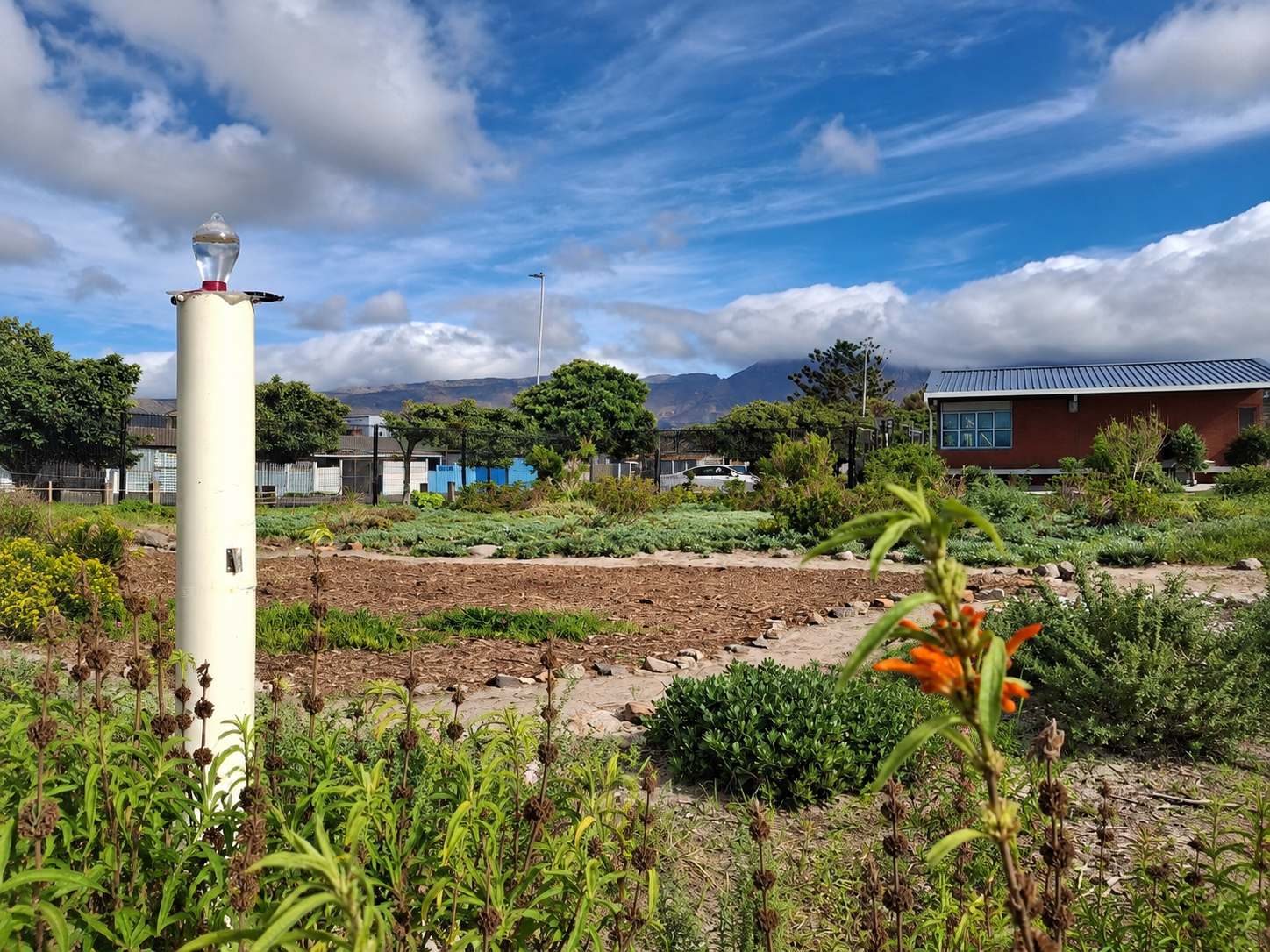
Ingcungcu is a Cape Town-based conservation and education initiative working to reconnect plants, birds and people through indigenous gardens. Its long-term vision is to create a stepping-stone corridor for nectar-feeding birds across the densely urbanised Cape Flats, helping reconnect Muizenberg Mountain with the Boland Mountains above Stellenbosch.
Rather than one enormous restored landscape, the corridor is being built garden by garden.
These pockets of locally indigenous fynbos provide food and habitat for sunbirds and other urban wildlife while helping connect fragments of threatened lowland fynbos. Ingcungcu describes them as “filling stations” for birds moving through the city.
It is habitat restoration on a human scale.
Small Gardens, Bigger Connections
What makes Ingcungcu’s approach particularly powerful is where many of these gardens are being planted: at schools.
The gardens become part habitat, part outdoor classroom.
Through its Eco Club programme, learners get involved in activities including indigenous plant knowledge, bird identification, gardening and observation. Ingcungcu’s work therefore restores more than physical habitat. It gives young people an opportunity to understand the biodiversity that exists around them and take an active role in caring for it.
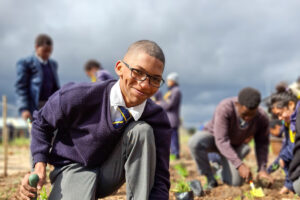
That matters in a city like Cape Town, where remarkable biodiversity exists alongside densely developed urban areas. A child planting an indigenous plant in a school garden may seem a long way removed from the conservation work happening in Africa’s large protected areas.
Ecologically, the scale is different. The principle is not. Healthy landscapes are built through connections.
Conservation does not stop at the boundary of a national park.
Cities can also provide habitat for birds, insects, pollinators and plants, particularly when indigenous vegetation is deliberately protected or restored. Small green spaces can create links between larger natural areas and make urban environments more permeable to wildlife. They also bring nature closer to people.
This is an important part of urban biodiversity. If nature only exists somewhere distant, conservation can feel distant too. A school garden, neighbourhood wetland or patch of indigenous vegetation creates the opportunity to experience biodiversity as part of everyday life.
Ingcungcu’s work brings those two ideas together: restoring ecological connections for wildlife while rebuilding people’s connection with the natural environment around them.
Learn more about Ingcungcu Sunbird Restoration and how OKOA Fund is supporting its work to reconnect habitats across Cape Town.
From Urban Gardens to Mountain Landscapes
Habitat restoration can happen at very different scales.
In Cape Town, Ingcungcu is showing what can happen garden by garden. Elsewhere in the Western Cape, another organisation supported by OKOA Fund is working across much larger landscapes.
Wild Restoration is a non-profit organisation focused on restoring biodiversity through practical conservation work, including the clearing of alien invasive vegetation, ecological monitoring and collaboration with local partners.
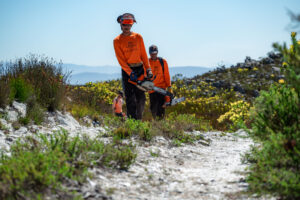
Their work includes restoration within the Riviersonderend Mountains, where Wild Restoration is contributing to efforts across a 28,000-hectare mountain range. Near Greyton, the organisation is also working to restore the Greyton Sandpit, a 230-hectare Priority 1 Critical Biodiversity Area connecting mountain and alluvial landscapes with the Riviersonderend River system.
Here, invasive vegetation threatens indigenous plants, habitats and water systems. Wild Restoration works with local partners and an experienced local clearing team to remove invasive species and give indigenous biodiversity space to recover.
But clearing is only one part of the work.
How Do We Know Habitat Restoration Is Working?
Restoration needs to be monitored.
Wild Restoration uses tools including trail cameras and botanical observations to better understand biodiversity within the landscapes where it works, while bioacoustic monitoring is also being explored as another way to record changes in the ecosystem.
Monitoring helps conservationists understand what happens after an intervention.
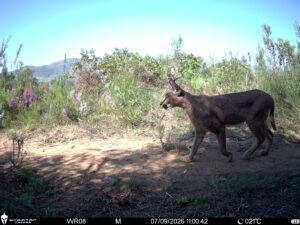
Is indigenous vegetation returning? Which animals are using the landscape? Are ecological processes beginning to recover? What needs more attention?
This matters because good habitat restoration in Africa is not simply about doing the work. It is also about understanding whether that work is achieving what it set out to do.
Different Places, the Same Principle
Ingcungcu and Wild Restoration work in very different landscapes. One is creating pockets of indigenous fynbos within the urban fabric of Cape Town. The other is clearing invasive vegetation and supporting biodiversity recovery across rivers, renosterveld and mountain landscapes in the Overberg.
But the principle connecting them is the same. Healthy ecosystems need connection.
A sunbird needs places to stop and feed as it moves across a city. Indigenous plants need space to recover when invasive vegetation is removed. Wildlife needs connected landscapes through which it can move. Rivers and catchments depend on functioning natural systems around them. And people are part of all of it.
Both projects reflect the kind of conservation OKOA Fund believes in: practical, collaborative and grounded in the needs of each landscape. While their approaches differ, Ingcungcu Sunbird Restoration and Wild Restoration share a long-term commitment to helping biodiversity recover.
Habitat Restoration Is About People Too
There is another reason habitat restoration matters. Healthy ecosystems support people.
South Africa’s biodiversity contributes to water security, food production, livelihoods, tourism and resilience to climate-related pressures. Healthy ecosystems can also provide services such as pollination, soil protection, carbon storage and freshwater regulation.
At OKOA Fund, we see wildlife, landscapes and communities as part of the same picture. Wildlife depends on healthy habitats, and those habitats depend on the people who protect and care for them. Lasting restoration means recognising and strengthening that relationship.
Can Small-Scale Habitat Restoration Really Make a Difference?
Yes, when it forms part of a considered, long-term approach. One garden will not reverse biodiversity loss across a city. One area cleared of invasive vegetation will not restore an entire landscape. But restoration builds.
A network of strategically placed gardens can provide habitat and create ecological stepping stones. Clearing invasive vegetation can give indigenous species an opportunity to recover. Monitoring can show what is changing and help conservation teams understand what needs to happen next.
Ingcungcu’s Sunbird Stepping-Stone pathway and Wild Restoration’s work in the Overberg operate at very different scales, but both show why individual restoration projects matter most when they contribute to something bigger.
Restoration does not always begin with thousands of hectares. Sometimes it begins with a school garden. Sometimes with a clearing team removing invasive vegetation from a river system.
What matters is understanding the landscape, doing the work carefully and staying long enough to see what happens next.
Habitat Restoration FAQs
What Is Habitat Restoration?
Habitat restoration is the process of helping damaged or degraded natural environments recover. It can include restoring indigenous vegetation, rehabilitating wetlands, removing invasive species and reconnecting fragmented habitats so that wildlife and ecological processes can function more effectively.
Why Is Habitat Restoration Important for Biodiversity?
Species depend on suitable habitat for food, shelter, breeding and movement. When habitats are lost or fragmented, wildlife and plant populations can decline or become isolated. Restoring habitat helps rebuild the ecological conditions biodiversity needs to survive.
What Is the Difference Between Habitat Restoration and Ecosystem Restoration?
Habitat restoration often focuses on improving the environment needed by particular species or groups of species. Ecosystem restoration is broader and aims to recover the ecological processes, biodiversity and functions of a degraded ecosystem. In practice, the two often overlap.
Can Habitat Restoration Happen in Cities?
Yes. Urban habitat restoration can include indigenous gardens, restored wetlands, ecological corridors and other green spaces.
Ingcungcu Sunbird Restoration in Cape Town is one example, creating indigenous fynbos gardens that provide habitat for wildlife while helping reconnect fragmented natural areas.
Why Are Invasive Plants a Problem for Habitat Restoration?
Invasive alien plants can outcompete indigenous vegetation and change the way natural ecosystems function. In some landscapes, they can also affect water availability and increase pressure on native species.
Removing invasive vegetation, followed by appropriate monitoring and ongoing management, can give indigenous biodiversity an opportunity to recover.
How Can People Support Habitat Restoration in Africa?
People can support credible organisations carrying out practical restoration work, volunteer with local initiatives, choose indigenous plants where appropriate and learn more about the ecosystems where they live.
OKOA Fund supports organisations working at different scales, including Ingcungcu Sunbird Restoration, which is reconnecting fragmented urban habitat through indigenous gardens and environmental education, and Wild Restoration, which is restoring biodiversity through invasive clearing, monitoring and landscape-level collaboration in the Western Cape.
Supporting this work over the long term matters because meaningful ecological restoration takes time.
Restoring Land, Restoring Life
Habitat restoration is ultimately about giving nature the space and support it needs to function again.
Sometimes that means restoring large mountain landscapes. Sometimes it means removing invasive vegetation along a river. Sometimes it means reconnecting fragments of habitat that have become separated.
And sometimes it starts in a school garden, where a sunbird finds its next source of nectar and a child begins to understand the living world around them.
The scale may change, but the connections remain.
At OKOA Fund, we support practical conservation initiatives that recognise the relationship between healthy landscapes, wildlife and people. From Ingcungcu’s sunbird gardens across the Cape Flats to Wild Restoration’s work in the Overberg, these projects show what restoration looks like on the ground.
It takes time. It takes monitoring. It takes people who understand and care for the places where they work. And it is built together.
Explore the habitat restoration projects supported by OKOA Fund and discover how you can help restore landscapes for wildlife and people.